
What Is Skin?
Skin is the largest organ in the human body. It forms the body’s outer covering and serves as the primary barrier between internal tissues and the external environment.
An average adult has approximately 1.5–2 square meters (16–22 square feet) of skin, accounting for about 15–16% of total body weight. Skin belongs to the integumentary system, a body system that includes the skin, hair, nails, sweat glands, and sebaceous glands.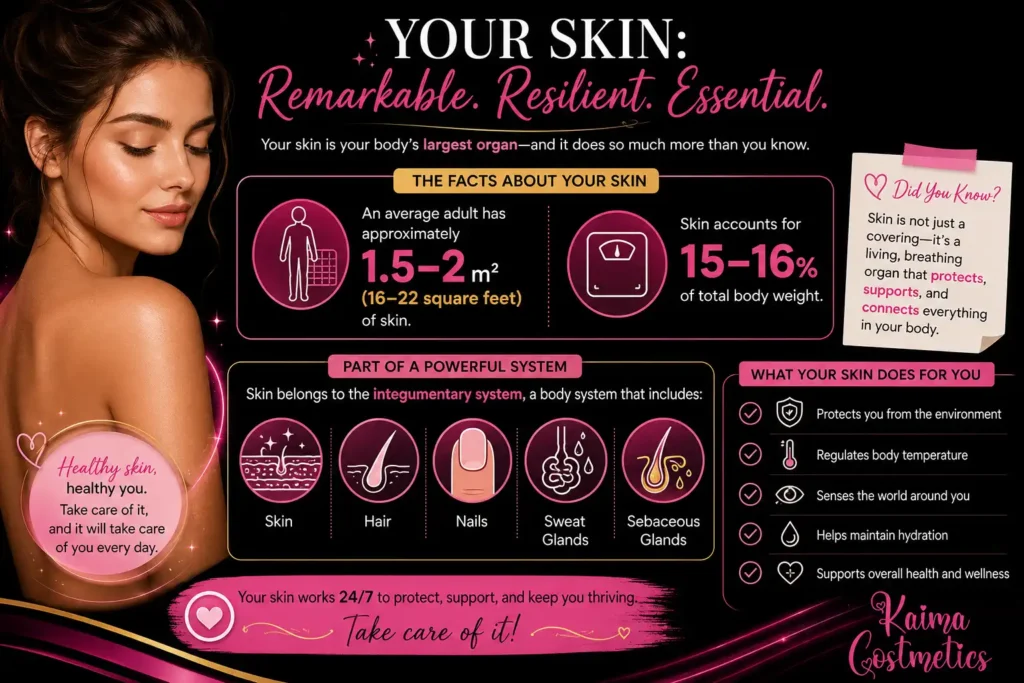
Unlike a simple covering, skin is a living organ composed of multiple tissue types, specialized cells, blood vessels, nerves, immune cells, and connective tissue. These components work together to protect the body, regulate temperature, maintain hydration, enable sensation, and support immune function.
From an evolutionary perspective, skin developed as a survival structure that allowed organisms to separate their internal environment from external threats. Without skin, humans would rapidly lose water, become vulnerable to infections, and struggle to maintain stable body temperature.
According to the National Institutes of Health (NIH), the skin acts as both a physical and immunological barrier while continuously communicating with the nervous, endocrine, and immune systems.
Skin Overview
Largest organ in the body
External protective barrier
Part of the integumentary system
Self-renewing tissue
Sensory organ
Functions:
Protection
Thermoregulation
Sensation
Immune defense
Vitamin D synthesis
Water balance
Relationships:
Connects with the immune system
Interacts with the nervous system
Supports endocrine functions
Houses the skin microbiome
Effects of Dysfunction:
Dehydration
Infection
Impaired wound healing
Temperature instability
Increased disease risk
Why Is Skin Important?
Skin is essential for survival because it protects the body while maintaining internal stability, a biological state known as homeostasis.
Protection Against Physical Injury
The skin barrier shields muscles, organs, bones, and blood vessels from external trauma.
The outermost epidermal cells contain keratin, a strong structural protein that increases resistance to friction and injury. Areas exposed to frequent pressure, such as the palms and soles, develop thicker epidermal layers as an adaptive response.
A construction worker handling tools daily develops thicker skin on the hands because epidermal cells increase keratin production to withstand repeated mechanical stress.
Protection Against Pathogens
Every day, humans encounter billions of bacteria, viruses, and fungi.
Most never enter the body because intact skin blocks their entry.
Research published in the journal Nature Reviews Immunology describes skin as an active immune organ containing specialized immune cells that detect and respond to invading microorganisms before infection develops.
Water Retention and Hydration
One of skin’s most overlooked functions is preventing excessive water loss.
The outer epidermis contains lipids, ceramides, cholesterol, and fatty acids that form a waterproof barrier.
Without this barrier, body fluids would evaporate continuously.
Burn patients demonstrate the importance of this function. Severe skin damage can result in dangerous fluid loss, electrolyte imbalance, and increased mortality risk.
Body Temperature Regulation
Humans maintain an internal temperature close to 37°C (98.6°F).
Skin helps achieve this through:
Sweating
Blood vessel dilation
Blood vessel constriction
When body temperature rises, sweat glands release sweat that evaporates and cools the skin.
When temperatures fall, blood vessels narrow to conserve heat.
Sensation
Skin is one of the body’s largest sensory organs.
Millions of sensory receptors detect:
Pressure
Touch
Pain
Vibration
Temperature
These signals travel through peripheral nerves to the brain, allowing rapid responses to environmental changes.
A person touching a hot stove withdraws their hand within fractions of a second because skin receptors activate protective neural pathways.
Skin Anatomy Overview
Skin anatomy extends far beyond its visible surface.
The organ consists of layered tissues, specialized cells, vascular networks, glands, nerves, connective tissue, and microbial communities.
Surface Structures
Visible skin structures include:
Pores
Hair shafts
Sweat gland openings
Skin ridges
Pigmented areas
Although visible externally, these structures connect to deeper tissues beneath the surface.
Internal Structures
Beneath the surface are:
Blood vessels
Lymphatic vessels
Nerve fibers
Hair follicles
Sweat glands
Sebaceous glands
Immune cells
These structures support nutrient delivery, waste removal, sensation, and defense.
Cellular Composition
Human skin contains numerous specialized cells.
Keratinocytes
Keratinocytes account for approximately 90–95% of epidermal cells.
They produce keratin and form the structural framework of the skin barrier.
Melanocytes
Melanocytes produce melanin.
Melanin absorbs ultraviolet radiation and reduces DNA damage caused by sunlight.
Fibroblasts
Fibroblasts reside primarily in the dermis.
They synthesize collagen and elastin fibers responsible for skin strength and flexibility.
Immune Cells
Skin contains:
Langerhans cells
Macrophages
T cells
Mast cells
These cells detect pathogens and initiate immune responses.
The Three Main Layers of Skin
Human skin consists of three primary layers.
Each layer has distinct structures, functions, and cellular compositions.
Epidermis
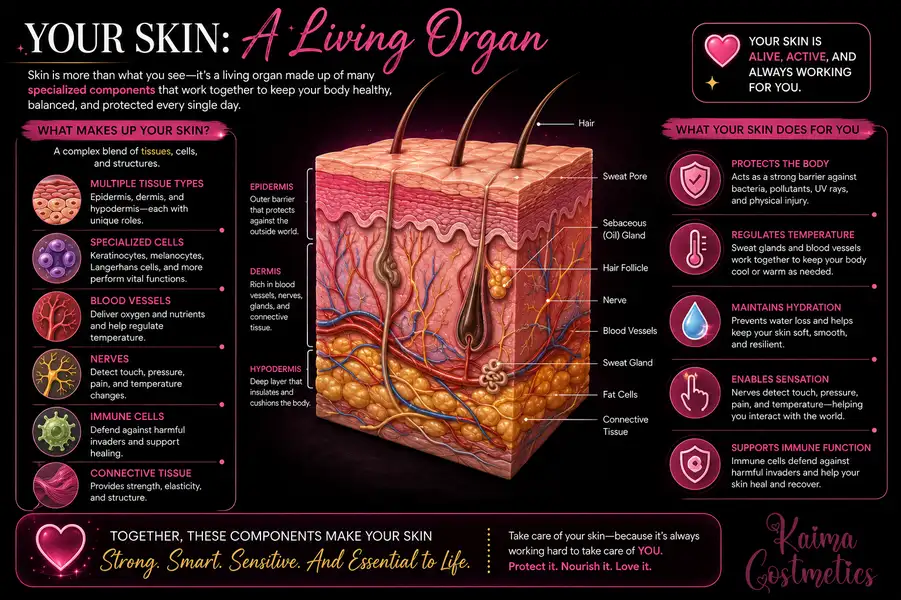
The epidermis is the outermost skin layer.
Its primary role is barrier formation and environmental protection.
The epidermis continuously renews itself through cell turnover.
Healthy adults replace most epidermal cells approximately every 28 days, although this process slows with age.
Keratinocytes
Keratinocytes create the skin’s protective framework.
As these cells mature, they migrate toward the surface and eventually form the stratum corneum.
Melanocytes
Melanocytes synthesize melanin.
Melanin protects DNA from ultraviolet radiation and contributes to skin color variation among populations.
Langerhans Cells
Langerhans cells function as immune sentinels.
They identify foreign substances and alert the immune system to potential threats.
Merkel Cells
Merkel cells contribute to fine-touch sensation.
These cells are especially concentrated in highly sensitive areas such as fingertips.
Dermis
The dermis lies beneath the epidermis and provides structural support.
This layer contains most of the skin’s connective tissue.
Collagen
Collagen represents approximately 75–80% of the skin’s dry weight.
It provides tensile strength and structural integrity.
Elastin
Elastin allows skin to stretch and return to its original shape.
Loss of elastin contributes to sagging associated with aging.
Blood Vessels
The epidermis lacks blood vessels.
The dermis supplies oxygen and nutrients through an extensive vascular network.
Nerves
Sensory nerve endings detect:
Touch
Pain
Temperature
Vibration
Sweat Glands
Eccrine sweat glands regulate body temperature through sweat production.
Humans possess roughly 2–4 million sweat glands distributed throughout the body.
Hair Follicles
Hair follicles help regulate temperature and contribute to sensory perception.
Hypodermis
The hypodermis, also called subcutaneous tissue, forms the deepest skin layer.
Although technically beneath the skin, it functions closely with the overlying layers.
Fat Storage
Adipocytes store energy in the form of fat.
These reserves support metabolic needs during periods of reduced caloric intake.
Shock Absorption
Subcutaneous fat cushions underlying structures from impact.
This protective role reduces injury to muscles, nerves, and bones.
Insulation
Fat tissue reduces heat loss and helps maintain stable body temperature.
Individuals with very low body fat often experience increased sensitivity to cold because insulation decreases.
What Are the Main Functions of Skin?
Skin performs several life-sustaining functions simultaneously.
Protection
Skin forms a multilayered barrier against:
Mechanical injury
Ultraviolet radiation
Chemical exposure
Microorganisms
This protection represents the skin’s primary survival function.
Immune Defense
The skin contains an extensive network of immune cells.
Research increasingly recognizes skin as an active immune organ rather than a passive barrier.
These immune cells identify pathogens and initiate protective responses before infections become systemic.
Thermoregulation
Body temperature regulation depends heavily on skin function.
Sweating and blood vessel adjustments help maintain thermal stability despite environmental fluctuations.
Sensation
Specialized receptors convert environmental stimuli into nerve signals interpreted by the brain.
This capability allows humans to interact safely with their surroundings.
Vitamin D Production
Skin initiates vitamin D synthesis when exposed to ultraviolet B (UVB) radiation.
Vitamin D supports:
Bone health
Calcium absorption
Immune function
Muscle function
According to the NIH Office of Dietary Supplements, sunlight-induced vitamin D production remains a major source of vitamin D for many individuals worldwide.
Water Balance
The skin barrier prevents excessive transepidermal water loss.
This function helps maintain hydration and electrolyte stability.
Wound Healing
Skin possesses remarkable regenerative abilities.
After injury, multiple biological processes occur simultaneously:
Clot formation
Inflammation
Tissue repair
Collagen remodeling
Surface regeneration
Successful wound healing restores barrier integrity and reduces infection risk.
What Is Human Skin Made Of?
Human skin is composed of cells, proteins, lipids, water, minerals, immune components, blood vessels, nerves, and connective tissue. Each component contributes to barrier function, structural support, communication, sensation, and repair.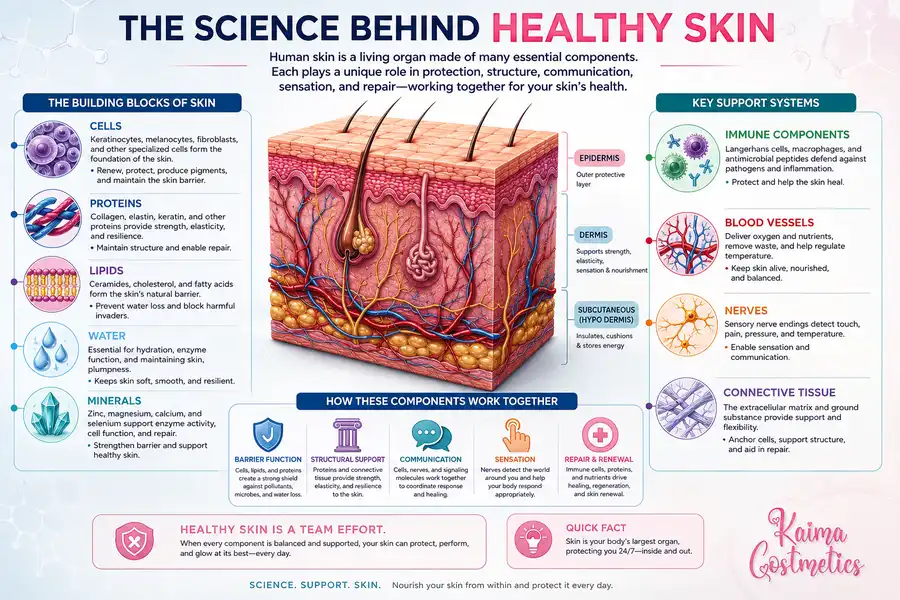
Scientists often describe skin as a biological ecosystem because multiple cell populations interact continuously with the immune system, nervous system, endocrine system, and microbiome.
Skin Cells
Cells are the functional units of skin.
Different cell types perform specialized tasks that maintain skin health and homeostasis.
Keratinocytes
Keratinocytes are the most abundant skin cells, accounting for roughly 90–95% of epidermal cells.
Their primary function is producing keratin, a fibrous protein that strengthens the skin barrier.
As keratinocytes migrate from deeper epidermal layers toward the surface, they undergo programmed maturation and eventually form the stratum corneum, the body’s first line of defense against environmental threats.
Research published in Nature Reviews Molecular Cell Biology identifies keratinocytes as active participants in immune signaling, wound healing, and inflammatory responses rather than merely structural cells.
Melanocytes
Melanocytes produce melanin, the pigment responsible for skin, hair, and eye color.
These cells reside primarily in the basal layer of the epidermis.
Melanin absorbs and scatters ultraviolet radiation, helping reduce DNA damage that could otherwise contribute to skin cancer.
People living near the equator historically evolved higher melanin production because stronger UV exposure created greater selective pressure for photoprotection.
Fibroblasts
Fibroblasts are the primary connective tissue cells of the dermis.
They produce:
Collagen fibers
Elastin fibers
Glycosaminoglycans
Extracellular matrix components
Fibroblasts continuously remodel skin tissue throughout life.
Age-related declines in fibroblast activity contribute to wrinkles, reduced elasticity, and slower wound healing.
Immune Cells
Skin contains diverse immune cells, including:
Langerhans cells
Macrophages
T lymphocytes
Mast cells
Dendritic cells
These cells monitor the skin environment and respond rapidly to pathogens, allergens, and injuries.
According to the National Institute of Allergy and Infectious Diseases (NIAID), skin serves as one of the body’s largest immune surveillance systems.
Structural Proteins
Proteins provide strength, flexibility, resilience, and repair capacity.
Keratin
Keratin is a durable structural protein found in:
Epidermis
Hair
Nails
Its tightly packed structure helps resist physical injury, friction, and water penetration.
Collagen
Collagen is the most abundant protein in the skin.
Approximately 70–80% of the dermis consists of collagen fibers.
Collagen provides:
Tensile strength
Structural integrity
Wound healing support
Aging reduces collagen production by approximately 1% per year after early adulthood, contributing to visible skin aging.
Elastin
Elastin enables skin to stretch and recoil.
Without elastin, facial expressions, movement, and mechanical stress would permanently deform skin tissue.
Loss of elastin contributes to:
Sagging skin
Fine lines
Reduced resilience
Skin Lipids
Lipids are essential for barrier integrity.
The outer skin barrier contains a carefully organized mixture of:
Ceramides
Cholesterol
Free fatty acids
These lipids fill spaces between skin cells and create a waterproof seal.
A useful analogy is a brick wall.
Keratinocytes act as bricks.
Lipids function as mortar.
Without mortar, the wall becomes weak and permeable.
Similarly, lipid deficiencies increase water loss and skin sensitivity.
Research from the Journal of Investigative Dermatology consistently shows that reduced ceramide levels are associated with eczema and impaired barrier function.
Water Content
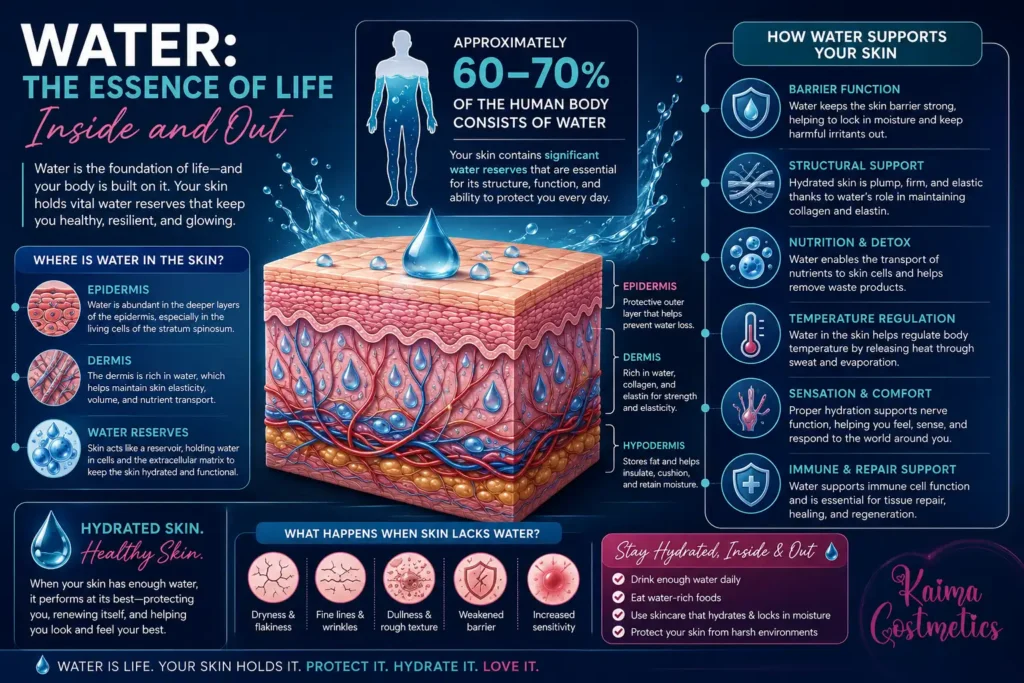
Approximately 60–70% of the human body consists of water, and skin contains significant water reserves.
Hydration supports:
Cellular metabolism
Enzyme activity
Barrier repair
Elasticity
Dehydrated skin often appears:
Rough
Dull
Less elastic
Water balance depends on both internal hydration and an intact skin barrier.
How Skin Protects the Human Body
Skin protects the body through four interconnected defense systems:
Physical barrier
Chemical barrier
Biological barrier
Immune barrier
Together, these systems form a sophisticated defense network that evolved over hundreds of millions of years.
Physical Barrier
The physical barrier consists primarily of the epidermis and stratum corneum.
This barrier prevents the following:
Pathogen entry
Excessive water loss
Chemical penetration
Mechanical injury
The stratum corneum contains flattened dead cells embedded within lipid layers.
Although these cells are biologically inactive, they create one of the body’s most effective protective structures.
A healthy skin barrier blocks most microorganisms before they can enter deeper tissues.
Chemical Barrier
Skin produces protective chemical substances, including
Antimicrobial peptides
Natural moisturizing factors
Organic acids
Sebum
These substances create conditions that discourage pathogen growth.
Human skin typically maintains a slightly acidic pH of approximately 4.5–5.5.
This “acid mantle” helps suppress harmful microbes while supporting beneficial microorganisms.
According to the American Academy of Dermatology, disruption of the acid mantle can contribute to irritation, infection, and barrier dysfunction.
Biological Barrier
The biological barrier consists primarily of the skin microbiome.
Trillions of microorganisms inhabit healthy skin surfaces.
These organisms compete with harmful microbes for space and nutrients.
Beneficial bacteria often prevent pathogen overgrowth before disease develops.
Immune Barrier
Immune cells throughout the skin constantly monitor for threats.
When injury or infection occurs, immune cells initiate responses that include:
Inflammation
Pathogen destruction
Tissue repair
Memory formation
This rapid response system allows skin to function as both a barrier and an immune organ.
Skin Microbiome
The skin microbiome refers to the community of microorganisms living on the skin surface.
These organisms include:
Bacteria
Fungi
Viruses
Mites
Although microorganisms are often associated with disease, most skin microbes are beneficial or harmless.
Why the Skin Microbiome Matters
The microbiome supports:
Barrier integrity
Immune education
Inflammation control
Pathogen resistance
Researchers increasingly describe the microbiome as an extension of the skin’s immune system.
Studies from the National Institutes of Health Human Microbiome Project demonstrated that healthy microbial communities contribute significantly to skin health and disease prevention.
Microbial Balance
Healthy skin maintains microbial balance rather than sterility.
Excessive use of harsh cleansers, unnecessary antibiotics, or environmental stressors may disrupt this balance.
Microbiome disruption has been linked to:
Acne
Eczema
Rosacea
Atopic dermatitis
Regional Differences
Different body regions host distinct microbial populations.
For example:
Oily areas
Forehead
Nose
Upper back
Often contain more Cutibacterium species.
Moist areas
Armpits
Groin
Contain higher concentrations of Corynebacterium and Staphylococcus species.
Dry areas
Forearms
Legs
Support greater microbial diversity.
These differences help explain why certain skin conditions develop in specific body locations.
Types of Human Skin
Dermatologists commonly classify skin into five major categories based on oil production, hydration levels, barrier function, and sensitivity.
Oily Skin
Oily skin produces excess sebum from sebaceous glands.
Characteristics include:
Shiny appearance
Enlarged pores
Increased acne risk
Sebum itself is not harmful.
Problems arise when excess oil combines with dead skin cells and bacteria.
Dry Skin
Dry skin lacks sufficient moisture and protective lipids.
Common signs include:
Flaking
Tightness
Rough texture
Increased sensitivity
Environmental conditions, aging, genetics, and certain medical conditions can contribute to dryness.
Combination Skin
Combination skin contains both oily and dry regions.
The T-zone often appears oily while cheeks remain normal or dry.
This is one of the most common skin types worldwide.
Normal Skin
Normal skin maintains balanced oil production and hydration.
Characteristics include:
Smooth texture
Minimal sensitivity
Small pores
Healthy barrier function
Normal skin still requires protection from ultraviolet radiation and environmental damage.
Sensitive Skin
Sensitive skin reacts more easily to environmental or cosmetic triggers.
Symptoms may include:
Burning
Stinging
Redness
Itching
Sensitive skin is not a disease.
Instead, it reflects heightened skin reactivity or impaired barrier function.
Thick Skin vs Thin Skin
Human skin is not uniform.
Different body regions contain specialized skin structures adapted to local functional demands.
What Is Thick Skin?
Thick skin occurs primarily on:
Palms
Soles
These areas experience constant friction and pressure.
As a result, the epidermis becomes significantly thicker.
Characteristics of Thick Skin
Thick epidermis
No hair follicles
No sebaceous glands
Increased keratin production
Enhanced resistance to abrasion
The stratum corneum may be several times thicker than in other body regions.
What Is Thin Skin?
Thin skin covers approximately 90% of the body surface.
It occurs on:
Arms
Legs
Face
Trunk
Scalp
Thin skin contains hair follicles and sebaceous glands.
Characteristics of Thin Skin
Thinner epidermis
Hair present
Sebaceous glands present
Greater flexibility
Higher variation between body regions
Thick Skin vs Thin Skin Comparison
Feature | Thick Skin | Thin Skin |
Primary Location | Palms and Soles | Most Body Areas |
Hair Follicles | Absent | Present |
Sebaceous Glands | Absent | Present |
Epidermal Thickness | Very Thick | Thin |
Resistance to Friction | High | Moderate |
Sensory Adaptation | Specialized for Grip | General Sensation |
Why These Differences Exist
Regional skin specialization reflects adaptation to function.
Palms and soles must withstand repeated mechanical stress.
Facial skin requires flexibility, sensation, temperature regulation, and communication through facial expressions.
The body therefore modifies skin structure according to local physiological needs.
This variation demonstrates that skin is not a uniform sheet covering the body but a highly specialized organ whose anatomy changes according to function.
How Skin Changes Throughout Life
Skin changes continuously from birth through old age. These changes affect barrier function, hydration, collagen production, immune activity, and appearance.
The biological processes responsible for skin aging begin much earlier than visible aging signs appear.
Infant Skin
Infant skin is thinner, more delicate, and less mature than adult skin.
The epidermal barrier continues developing after birth, making infants more vulnerable to:
Water loss
Irritation
Infection
Environmental stressors
Research published in Pediatric Dermatology shows that infant skin has higher transepidermal water loss than adult skin because barrier structures are still maturing.
This explains why newborn skin often becomes dry or irritated more easily than adult skin.
Childhood Skin
During childhood, skin gradually strengthens.
Barrier function improves, hydration regulation becomes more efficient, and immune responses mature.
Children generally experience faster wound healing than adults because cellular repair processes remain highly active.
Adult Skin
During early adulthood, skin typically reaches peak structural performance.
Collagen production, elastin function, hydration levels, and cellular turnover operate efficiently.
Most healthy adults experience epidermal turnover approximately every 28 days.
Skin can still be damaged by:
Ultraviolet radiation
Smoking
Air pollution
Poor nutrition
Chronic stress
These factors accelerate biological aging.
Aging Skin
Skin aging occurs through two major mechanisms:
Intrinsic Aging
Intrinsic aging results from natural biological processes.
It is influenced by:
Genetics
Hormones
Cellular aging
Reduced repair capacity
Intrinsic aging causes gradual reductions in collagen production and cell turnover.
Extrinsic Aging
Extrinsic aging results from environmental exposure.
Major contributors include:
Sun exposure
Smoking
Air pollution
Repeated inflammation
Research consistently identifies ultraviolet radiation as the leading cause of premature skin aging.
The American Academy of Dermatology estimates that up to 80% of visible facial aging may be related to cumulative UV exposure.
Collagen Decline
Collagen production decreases with age.
Studies suggest collagen levels decline by approximately 1% annually after early adulthood.
Consequences include:
Fine lines
Wrinkles
Reduced firmness
Slower wound healing
Elasticity Loss
Elastin fibers gradually fragment and weaken.
As elasticity decreases, skin becomes less capable of returning to its original shape after stretching.
This contributes to sagging and loss of skin resilience.
Barrier Changes
Older skin often exhibits:
Increased dryness
Reduced lipid production
Slower repair
Greater sensitivity
These changes increase susceptibility to irritation and environmental damage.
Common Skin Conditions
Skin diseases affect millions of people worldwide.
The World Health Organization recognizes skin disorders as a significant global health burden because they impact physical health, emotional well-being, and quality of life.
Acne
Acne develops when hair follicles become blocked by:
Excess sebum
Dead skin cells
Bacteria
Inflammation contributes to the formation of:
Blackheads
Whiteheads
Papules
Pustules
Acne affects approximately 85% of adolescents and many adults.
Eczema
Eczema, also known as atopic dermatitis, is a chronic inflammatory skin condition.
Common symptoms include:
Dryness
Itching
Redness
Barrier dysfunction
Research indicates that many eczema patients have reduced levels of barrier-supporting proteins and lipids.
Psoriasis
Psoriasis is an immune-mediated disease that accelerates skin cell turnover.
Instead of renewing every few weeks, affected skin may regenerate within days.
This rapid growth produces:
Thick plaques
Scaling
Inflammation
Rosacea
Rosacea causes chronic facial redness and visible blood vessels.
Triggers may include:
Heat
Alcohol
Spicy foods
Sun exposure
Emotional stress
The exact cause remains under investigation, though immune and vascular factors appear important.
Dermatitis
Dermatitis refers to skin inflammation caused by:
Irritants
Allergens
Environmental exposures
Examples include:
Contact dermatitis
Irritant dermatitis
Allergic dermatitis
Skin Cancer
Skin cancer develops when DNA damage causes abnormal cell growth.
The most common forms include:
Basal cell carcinoma
Squamous cell carcinoma
Melanoma
According to the World Health Organization, ultraviolet radiation remains one of the most significant preventable risk factors for skin cancer.
Signs of Healthy Skin
Healthy skin reflects effective barrier function, adequate hydration, balanced cellular activity, and proper immune regulation.
Good Hydration
Well-hydrated skin typically appears:
Smooth
Plump
Flexible
Hydration supports enzymatic processes involved in barrier maintenance and repair.
Elasticity
Elastic skin returns quickly to its original shape after gentle stretching.
Elasticity depends largely on:
Collagen fibers
Elastin fibers
Water content
Loss of elasticity often indicates aging or structural damage.
Even Skin Tone
Healthy skin generally exhibits relatively uniform pigmentation.
Temporary variations may occur because of:
Sun exposure
Hormonal changes
Inflammation
Persistent irregular pigmentation may indicate underlying skin damage or disease.
Intact Skin Barrier
A healthy barrier helps prevent:
Excessive water loss
Irritation
Infection
Signs of strong barrier function include:
Minimal redness
Limited sensitivity
Consistent hydration
Efficient Wound Healing
Healthy skin repairs minor injuries efficiently.
Cuts and abrasions that heal normally often indicate healthy cellular communication and immune activity.
How To Maintain Healthy Skin
Scientific evidence consistently shows that healthy skin depends on protecting barrier function, minimizing unnecessary damage, and supporting normal biological processes.
Use Sun Protection Daily
Ultraviolet radiation is one of the most significant causes of:
Premature aging
Pigmentation changes
Skin cancer
Dermatologists routinely recommend:
Broad-spectrum sunscreen
Protective clothing
Shade during peak UV hours
The American Academy of Dermatology recommends sunscreen with SPF 30 or higher for routine protection.
Maintain Skin Hydration
Hydration supports barrier integrity and cellular function.
Effective hydration strategies include:
Drinking adequate fluids
Using moisturizers
Avoiding excessive cleansing
Moisturizers help reduce transepidermal water loss and reinforce barrier lipids.
Follow a Balanced Diet
Skin requires nutrients for maintenance and repair.
Nutrients linked to skin health include:
Protein
Vitamin C
Vitamin A
Vitamin D
Zinc
Essential fatty acids
Vitamin C supports collagen synthesis.
Protein provides amino acids required for tissue repair.
Omega-3 fatty acids may help regulate inflammatory processes.
Prioritize Sleep
Sleep supports:
Cellular repair
Immune regulation
Hormonal balance
Research demonstrates that chronic sleep deprivation impairs barrier recovery and wound healing.
Avoid Smoking
Smoking accelerates skin aging through multiple mechanisms.
These include:
Reduced blood flow
Increased oxidative stress
Collagen degradation
Numerous studies have linked smoking with earlier wrinkle formation and reduced skin elasticity.
Avoid Excessive Skin Irritation
Overuse of harsh products may damage the skin barrier.
Examples include:
Strong exfoliants
Excessive cleansing
Aggressive scrubbing
Maintaining barrier integrity often improves overall skin health more effectively than excessive product use.
Why Skin Is Essential for Human Survival
Skin is not merely a covering.
It is a multifunctional organ that allows humans to survive in changing environments.
Without skin, the body would struggle to:
Retain water
Regulate temperature
Detect danger
Prevent infection
Heal wounds
Produce vitamin D
Every major physiological system interacts with skin in some way.
The immune system relies on skin surveillance.
The nervous system relies on skin sensation.
The circulatory system relies on skin temperature regulation.
The endocrine system interacts with skin through hormones and vitamin D synthesis.
This interconnectedness explains why dermatologists increasingly describe skin as both a barrier organ and a communication organ.
Expert Insights
Dr. Albert Kligman, a pioneering dermatologist and skin researcher, famously described skin as:
“A complex organ with numerous physiological functions beyond protection.”
Modern dermatology supports this view.
Researchers now recognize that skin participates in:
Immune communication
Neuroendocrine signaling
Microbiome regulation
Environmental adaptation
The American Academy of Dermatology emphasizes that maintaining skin barrier health is one of the most important factors in preventing irritation, inflammation, and chronic skin disorders.
Frequently Asked Questions
What is skin made of?
Skin consists of cells, proteins, lipids, water, connective tissue, blood vessels, nerves, immune cells, glands, and hair follicles. Major components include keratinocytes, melanocytes, fibroblasts, collagen, elastin, ceramides, and fatty acids.
Why is skin the largest organ?
Skin covers nearly the entire body surface. In adults, it spans approximately 1.5–2 square meters and accounts for roughly 15–16% of total body weight.
What are the three layers of skin?
The three primary layers are:
Epidermis
Dermis
Hypodermis (subcutaneous tissue)
Each layer performs specialized functions related to protection, sensation, support, and insulation.
What is the main function of skin?
Protection is the primary function of skin. It also regulates temperature, prevents water loss, supports immune defense, enables sensation, produces vitamin D, and assists wound healing.
How thick is human skin?
Skin thickness varies by location.
The thinnest skin occurs around the eyelids and may measure less than 1 millimeter.
The thickest skin occurs on the palms and soles and may exceed 4 millimeters.
How does skin protect the body?
Skin protects through:
Physical barriers
Chemical defenses
Immune responses
Microbiome interactions
Together these systems block pathogens, reduce water loss, and resist environmental damage.
Can skin repair itself?
Yes.
Skin possesses remarkable regenerative abilities.
Wound healing involves clot formation, inflammation, tissue repair, collagen production, and epidermal regeneration.
Why is melanin important?
Melanin helps protect cells from ultraviolet radiation.
It absorbs UV energy and reduces DNA damage that may contribute to skin cancer and premature aging.
What causes skin aging?
Skin aging results from both intrinsic and extrinsic factors.
Major contributors include:
Genetics
Hormonal changes
Ultraviolet radiation
Smoking
Air pollution
Chronic inflammation
What is the skin microbiome?
The skin microbiome is the collection of microorganisms living on the skin surface.
These microbes help regulate immunity, maintain barrier function, and prevent harmful organisms from becoming dominant.
Key Takeaways
Skin is the largest organ in the human body and a major component of the integumentary system.
Skin functions include protection, immune defense, thermoregulation, sensation, vitamin D synthesis, hydration maintenance, and wound healing.
Human skin contains three primary layers: epidermis, dermis, and hypodermis.
Keratinocytes, melanocytes, fibroblasts, collagen, elastin, and lipids are essential components of skin structure and function.
The skin barrier protects against physical injury, pathogens, chemicals, and water loss.
The skin microbiome plays a critical role in immune health and barrier maintenance.
Skin changes throughout life because of aging, environmental exposure, and biological processes.
Healthy skin depends on strong barrier function, adequate hydration, proper nutrition, sufficient sleep, and protection from ultraviolet radiation.
Scientific research increasingly recognizes skin as an active immune, sensory, and communication organ rather than merely an external covering.
Understanding skin anatomy and physiology helps individuals make evidence-based decisions about skincare, health, and disease prevention.