
Contact lens exams did not emerge because eye doctors wanted an additional appointment.
They emerged because contact lenses introduced an entirely new category of clinical risk.
Glasses sit in front of the eye.
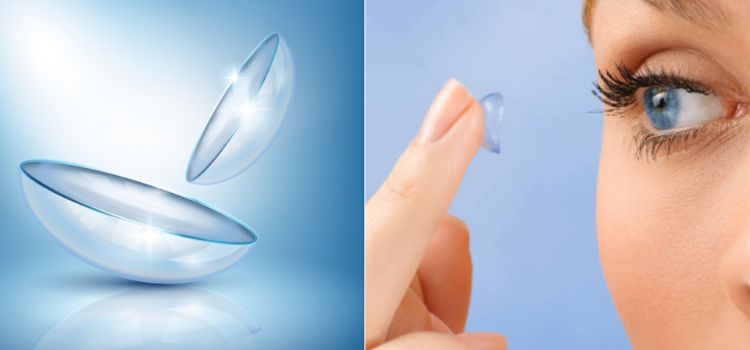
Contact lenses sit directly on living tissue.
That difference changed everything.
During the early decades of contact lens adoption, practitioners discovered that patients with identical prescriptions often had completely different outcomes. One patient could wear a lens comfortably for twelve hours. Another could develop redness, irritation, or corneal complications despite wearing the same lens.
The reason became clear as research into corneal physiology expanded.
Successful contact lens wear depends on variables that have little to do with prescription power:
- Corneal curvature
- Tear film stability
- Oxygen availability
- Eyelid anatomy
- Blink dynamics
- Ocular surface health
This realization transformed contact lens fitting from a simple optical exercise into a specialized branch of clinical eye care.
Today, a contact lens exam is fundamentally a risk-management process. The practitioner is not merely determining how to make vision clear. They are determining how to keep the cornea healthy while providing clear vision over months and years of wear.
That distinction explains why contact lens prescriptions require separate evaluations and annual renewals.
Why Eye Doctors Spend So Much Time Evaluating the Tear Film
Many patients believe contact lens comfort depends primarily on the lens itself.
Practitioners often think differently.
A contact lens sits on the tear film, not directly on the cornea.
From a clinical perspective, the tear film functions as part of the lens system.
This is why two patients wearing the same contact lens can report completely different experiences.
One may describe all-day comfort.
The other may report dryness after only a few hours.
The lens is identical.
The tear film is not.
Modern contact lens practice increasingly recognizes that successful wear depends as much on tear film quality as on lens design.
This represents a major shift in eye care.
Twenty years ago, many discomfort complaints resulted in practitioners changing lens brands.
Today, clinicians often evaluate meibomian gland function, tear stability, ocular surface inflammation, and blink patterns before changing the lens itself.
The industry’s understanding has evolved from:
“What is the best lens?”
to
“What is the best lens-tear film combination for this patient?”
That shift explains why dry eye management has become one of the fastest-growing areas in contact lens practice.
How Contact Lens Technology Changed the Contact Lens Exam
The contact lens exam performed today would be nearly unrecognizable to practitioners working fifty years ago.
Early contact lens fitting relied heavily on practitioner experience and trial-and-error.
Modern fitting increasingly relies on diagnostic technology.
Corneal topographers can generate thousands of measurements across the ocular surface within seconds.
Digital imaging systems allow practitioners to evaluate lens movement and centration with remarkable precision.
Advanced tear film diagnostics can identify instability before symptoms become noticeable.
These technologies have fundamentally changed clinical decision-making.
The modern practitioner is no longer asking:
“Does this lens appear to fit?”
The question has become:
“Which lens geometry and material best match the measured characteristics of this individual eye?”
This transition mirrors broader trends across medicine, where data-driven personalization is gradually replacing generalized treatment approaches.
The result is higher fitting success rates, improved comfort, and earlier detection of problems that historically went unnoticed.
Patients often experience this progress without realizing it.
A comfortable daily disposable lens worn today reflects decades of advances in optics, biomaterials science, corneal physiology, manufacturing, and diagnostic technology.
Why Contact Lens Prescriptions Expire Every Year
Many patients assume annual contact lens prescription renewals exist primarily for regulatory reasons.
The physiological reason is far more important.
A contact lens prescription is not simply a measurement of refractive error.
It is an ongoing assessment of how a medical device interacts with a living biological system.
Vision may remain unchanged while the eye itself changes.
The cornea can undergo subtle alterations in shape.
The tear film can become less stable.
Meibomian gland dysfunction may develop.
Age-related changes can affect lens tolerance.
Even lifestyle changes can influence wear success.
A software engineer spending ten hours per day in front of multiple monitors may experience very different tear film behavior than they did five years earlier.
From a clinical perspective, the question is rarely:
“Can this patient still see clearly?”
The more important question is:
“Can this patient still wear this lens safely?”
This distinction explains why contact lens prescriptions require periodic reassessment while many patients wear the same glasses prescription for years.
The annual renewal process evolved as research increasingly linked long-term contact lens success to ongoing physiological monitoring rather than vision correction alone.
What Eye Doctors Look For That Patients Usually Miss
Patients evaluate contact lenses differently than practitioners.
Patients focus on:
- Vision
- Comfort
- Convenience
Practitioners focus on:
- Corneal physiology
- Oxygen availability
- Mechanical interaction
- Tear exchange
- Long-term tissue health
A patient may report that a lens feels perfect.
The slit lamp examination may reveal subtle signs of physiological stress.
Examples include:
- Corneal staining
- Limbal redness
- Conjunctival indentation
- Reduced tear breakup time
- Early inflammatory changes
These findings may exist long before symptoms appear.
This difference in perspective explains why contact lens evaluations often identify problems that surprise patients.
The absence of symptoms does not always indicate the absence of physiological stress.
Much of modern contact lens practice involves identifying small problems before they become large ones.
This preventive approach mirrors developments in other areas of healthcare, where early intervention frequently produces better outcomes than treating advanced disease.
Why Some Patients Fail Contact Lens Wear Despite Perfect Vision
One of the most misunderstood aspects of contact lens care is that visual acuity alone does not determine success.
A patient may achieve 20/20 vision and still become a poor contact lens wearer.
This reality surprises many first-time users.
The reason is that contact lens wear depends on multiple biological systems functioning together.
Successful wear requires:
- A healthy tear film
- Adequate blinking
- Sufficient oxygen delivery
- Compatible lens materials
- Appropriate lens fit
- Healthy eyelid anatomy
If any of these systems fail, the overall experience may deteriorate.
This explains why contact lens fitting increasingly resembles systems engineering.
Practitioners evaluate how multiple variables interact rather than optimizing a single measurement.
The best lens for one patient may fail completely in another patient with an identical prescription because the surrounding biological environment differs.
Modern contact lens practice recognizes that successful wear is not determined by the lens alone.
It emerges from the interaction between the lens, the eye, the tear film, the environment, and the patient’s daily habits.
How the Rise of Daily Disposable Lenses Changed Clinical Practice
The modern contact lens exam is heavily influenced by a technological shift that occurred long after contact lenses were invented.
For much of the twentieth century, reusable lenses dominated the market.
Patients cleaned lenses nightly, stored them in disinfecting solutions, and reused them for months or even years.
This model created challenges that extended beyond vision correction.
Clinical studies repeatedly identified problems associated with:
- Protein deposits
- Lipid deposits
- Solution sensitivities
- Poor compliance
- Inadequate lens replacement
Practitioners discovered an uncomfortable reality.
Many patients did not follow recommended cleaning protocols.
Some stretched monthly lenses into three months.
Others reused old storage cases for years.
Many topped off solutions instead of replacing them.
From an engineering perspective, the lens itself was often functioning correctly.
Human behavior was the weak link.
Daily disposable lenses fundamentally changed this equation.
Instead of asking patients to maintain a sterile reusable medical device, practitioners could prescribe a fresh lens each day.
The result was not simply improved convenience.
It altered clinical decision-making.
Many practitioners now begin lens selection by asking:
“Can this patient succeed with a daily disposable lens?”
rather than
“Which reusable lens should this patient wear?”
This shift illustrates how technological innovation can reshape clinical practice even when the underlying visual correction remains unchanged.
The Economics Behind Contact Lens Exams
Many patients are surprised when they discover that a contact lens exam often involves fees beyond a standard vision examination.
From the patient’s perspective, both appointments may appear similar.
From the practitioner’s perspective, they are fundamentally different services.
A routine vision exam answers:
“What prescription provides the clearest vision?”
A contact lens exam answers:
“What prescription, material, geometry, replacement schedule, and wearing strategy provide clear vision while maintaining long-term ocular health?”
The second question requires substantially more clinical work.
Additional tasks often include:
- Corneal measurements
- Tear film analysis
- Trial lens evaluation
- Follow-up assessments
- Lens parameter adjustments
- Patient education
In many cases, practitioners assume ongoing responsibility for monitoring the interaction between a medical device and living tissue.
The fitting fee reflects this additional clinical complexity.
Understanding this distinction helps patients recognize that contact lens fitting is not merely a product purchase.
It is a specialized healthcare service.
How Contact Lens Exams Reflect Advances in Biomaterials Science
The history of contact lens exams mirrors the history of contact lens materials.
As lenses became more sophisticated, examinations became more sophisticated.
Early glass lenses offered limited fitting options.
The primary concern was whether a patient could tolerate wearing them at all.
PMMA lenses introduced new fitting considerations but created oxygen-related challenges.
Hydrogel materials improved comfort and expanded adoption.
Silicone hydrogel lenses transformed physiological performance by dramatically increasing oxygen transmission.
Each material innovation introduced new clinical questions.
Practitioners needed to understand:
- Oxygen permeability
- Oxygen transmissibility
- Corneal physiology
- Material modulus
- Surface wettability
The contact lens exam evolved in parallel.
“Modern contact lens fitting can be understood partly as an exercise in applied biomaterials science.”
The practitioner is not simply matching a prescription to a lens.
They are selecting a material that will function appropriately within a complex biological environment.
This connection between material science and clinical practice is one reason contact lens care continues to evolve decades after the invention of soft lenses.
Contact Lens Exams and the Evolution of Vision Correction
A contact lens exam exists because contact lenses occupy a unique position in the history of vision correction.
Eyeglasses and contact lenses solve the same optical problem.
They do so in fundamentally different ways.
Glasses create a corrective optical system positioned in front of the eye.
Contact lenses become part of the eye’s optical system.
This distinction changes both the opportunities and risks.
Glasses rarely affect corneal physiology.
Contact lenses influence:
- Tear dynamics
- Oxygen delivery
- Corneal metabolism
- Eyelid interactions
- Ocular surface health
As a result, contact lens care evolved into a hybrid discipline that combines:
- Optics
- Physiology
- Biomaterials science
- Preventive medicine
The contact lens exam reflects this evolution.
It is simultaneously a vision assessment, a tissue health assessment, and a medical device evaluation.
Few healthcare encounters require practitioners to integrate all three domains during a single appointment.
Why Contact Lens Success Depends More on Behavior Than Technology
The contact lens industry has spent decades improving materials, designs, and manufacturing.
Yet many complications still originate from human behavior rather than lens technology.
Large observational studies repeatedly identify behavioral factors such as:
- Sleeping in lenses when not approved
- Extending replacement schedules
- Poor hand hygiene
- Inadequate lens cleaning
- Water exposure
These behaviors increase risk even when modern lens technology is used.
This creates an important clinical reality.
The best lens on the market cannot compensate for unsafe habits.
Many practitioners therefore spend substantial time on education during contact lens exams.
Patient behavior often predicts long-term success more accurately than lens specifications alone.
This explains why successful contact lens practice increasingly combines clinical expertise with patient coaching and risk communication.
The prescription matters.
The behavior often matters more.
The Hidden Engineering Problem Behind Every Contact Lens Exam
Every contact lens fitting attempts to solve a difficult engineering problem.
The practitioner must optimize multiple competing variables simultaneously.
Increasing oxygen transmission may affect material properties.
Again, Increasing stability may reduce movement.
Increasing movement may reduce visual consistency.
Increasing hydration may increase dehydration later in the day.
There is rarely a perfect solution.
Instead, clinicians seek the most appropriate compromise for each individual patient.
Engineers call this optimization.
Eye care practitioners perform a version of it every day.
A lens that works perfectly for a marathon runner may not be ideal for a software developer spending twelve hours in climate-controlled indoor environments.
A lens that succeeds for a teenager may not perform similarly for a sixty-year-old patient with meibomian gland dysfunction.
The fitting process therefore resembles personalized engineering more than product selection.
The practitioner is designing a system rather than dispensing a device.
Why Contact Lens Exams Are Becoming More Personalized
Historically, contact lens fitting followed a relatively standardized process.
Patients with similar prescriptions often received similar lenses.
Modern practice increasingly recognizes the limitations of that approach.
Research continues to demonstrate significant variability in:
- Corneal shape
- Tear film composition
- Blink behavior
- Ocular surface biology
- Lifestyle demands
This variability has accelerated interest in personalized fitting strategies.
Today’s practitioners increasingly consider factors such as:
- Digital device use
- Environmental exposure
- Occupation
- Sports participation
- Dry eye risk
- Age-related changes
The future of contact lens care is likely to become even more individualized.
Advances in imaging, artificial intelligence, and ocular surface diagnostics are pushing the profession toward increasingly customized recommendations.
The goal is no longer finding a lens that works for most people.
The goal is finding the lens that works best for this specific patient.
Understanding the Real Purpose of a Contact Lens Exam
Most patients arrive expecting a vision test.
Most leave having participated in something far more sophisticated.
A modern contact lens exam evaluates the interaction between:
- Light and optics
- Corneal anatomy
- Tear film physiology
- Lens materials
- Patient behavior
- Long-term ocular health
The examination exists because contact lenses are unique among vision correction technologies.
They are optical devices that function inside a living biological environment.
Every recommendation made during the exam reflects decades of advances in:
- Optometry
- Ophthalmology
- Biomaterials science
- Corneal physiology
- Manufacturing technology
- Clinical research
What appears to be a simple lens prescription is often the final result of hundreds of clinical decisions, measurements, and scientific principles working together.
Understanding this broader context helps explain why contact lens exams remain an essential component of safe, comfortable, and effective contact lens wear.
The examination is not simply about helping patients see clearly today.
It is about helping them maintain clear vision and healthy eyes for years to come.
Frequently Asked Questions
Is a contact lens exam different from a regular eye exam?
Yes. A contact lens exam includes specialized measurements and fitting assessments that are not part of a standard vision examination.
How long does a contact lens exam take?
Most appointments take between 30 and 60 minutes, although specialty lens fittings may require additional time.
Why does my contact lens prescription expire every year?
Annual evaluations help monitor vision, corneal health, tear film quality, and lens performance. These factors may change over time.
Can I use my glasses prescription to buy contact lenses?
No. Contact lens prescriptions contain additional parameters such as base curve, diameter, and lens brand specifications.
What if I have astigmatism?
Most people with astigmatism can wear contact lenses. Toric lenses are specifically designed for this purpose.
Can I wear contact lenses if I have dry eyes?
Many people with dry eye can successfully wear contact lenses. Appropriate lens selection and dry eye management are often necessary.
How often should contact lens wearers have an exam?
Annual examinations are generally recommended for most wearers.