
Most people think contact lenses simply make blurry vision clear.
The reality is more sophisticated.
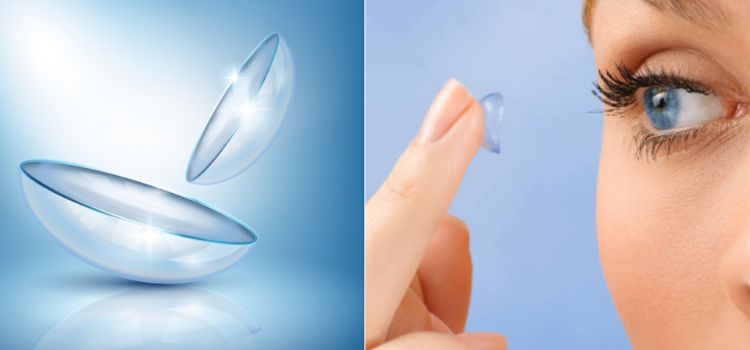
Modern contact lenses are biomedical devices that integrate with the tear film, cornea, and visual system to modify how light reaches the retina.
Understanding how contact lenses work helps explain:
- Why different prescriptions require different lens designs
- Why oxygen transmission matters
- Why tear film quality affects comfort
- Why professional fitting remains important
- Why modern lens materials continue evolving
Many current contact lens technologies emerged directly from challenges discovered during more than 500 years of contact lens development.
Understanding the science behind contact lenses therefore provides insight into both modern eye care and the future of vision correction.
Why Modern Contact Lens Design Reflects Historical Lessons
Many features of modern contact lenses exist because earlier designs revealed important limitations.
Contact lens history is not simply a sequence of inventions.
It is a sequence of problem-solving innovations.
| Historical Problem | Modern Solution |
|---|---|
| Glass lens discomfort | Soft hydrogel materials |
| Corneal oxygen deprivation | Silicone hydrogel materials |
| Lens deposits | Frequent replacement schedules |
| Infection risk | Daily disposable lenses |
| Astigmatism instability | Advanced toric stabilization systems |
| Presbyopia | Multifocal optical designs |
| Corneal irregularities | Modern scleral lenses |
Understanding these relationships helps explain why modern contact lenses are designed the way they are.
Many innovations that seem obvious today emerged only after decades of research into optics, corneal physiology, and biomaterials.
Why Silicone Hydrogel Changed Contact Lens Practice
The development of silicone hydrogel lenses represents one of the most important advancements in modern contact lens science.
Earlier hydrogel lenses improved comfort significantly compared with rigid lenses.
However, oxygen delivery remained a concern.
The cornea depends heavily on atmospheric oxygen because it contains no blood vessels.
Researchers found that insufficient oxygen transmission in contact lenses could contribute to corneal edema, corneal neovascularization, epithelial microcysts, endothelial alterations, and other hypoxia-related corneal complications.
- Corneal swelling
- Redness
- Discomfort
- Reduced lens tolerance
- Corneal neovascularization
Silicone hydrogel materials addressed this challenge by creating oxygen pathways through the lens material itself.
This dramatically increased oxygen transmissibility (Dk/t).
Why This Changed Clinical Practice
Before silicone hydrogel, practitioners frequently balanced comfort against oxygen delivery.
After silicone hydrogel, many patients could achieve:
- Improved comfort
- Better corneal physiology
- Longer daily wear times
- Reduced hypoxia-related complications
This shift transformed contact lens prescribing worldwide.
How Contact Lens Manufacturing Affects Vision Quality
Most discussions of contact lenses focus on optics.
Manufacturing precision is equally important.
Modern contact lenses are manufactured using:
- Precision molding
- Lathe-cutting technologies
- Computer-controlled production systems
- Automated inspection platforms
Microscopic variations in lens geometry can influence the following:
- Optical performance
- Lens stability
- Comfort
- Oxygen transmission
Today’s manufacturing tolerances are measured in microns.
These levels of precision allow manufacturers to produce millions of lenses with highly consistent optical properties.
This manufacturing capability is one reason modern contact lenses provide dramatically better performance than earlier generations.
How Eye Care Professionals Choose Contact Lenses
Many consumers assume contact lens selection depends entirely on prescription strength.
In clinical practice, lens selection is far more complex.
Practitioners evaluate multiple factors simultaneously.
Refractive Error
The type of correction required influences lens design.
Examples include:
- Myopia
- Hyperopia
- Astigmatism
- Presbyopia
Corneal Shape
Corneal curvature influences:
- Base curve selection
- Lens movement
- Stability
- Visual performance
Measurements often include:
- Keratometry
- Corneal topography
Tear Film Quality
The tear film plays a central role in lens success.
Professionals often assess:
- Tear stability
- Tear volume
- Blink quality
- Dry eye risk
Lifestyle Requirements
The best lens for an athlete may differ significantly from the best lens for an office worker.
Examples include:
- Daily disposables for frequent travelers
- Silicone hydrogel lenses for long daily wear
- Multifocal lenses for presbyopia
- Specialty scleral lenses for corneal disease
The goal is not simply correcting vision.
The goal is optimizing vision, comfort, physiology, and lifestyle compatibility simultaneously.
The Companies Driving Modern Contact Lens Innovation
Many contact lens technologies discussed throughout this article were developed through decades of investment by major manufacturers.
Several companies have played particularly important roles in advancing lens science.
Alcon
Known for advancements in:
- Silicone hydrogel materials
- Daily disposable technologies
- Lens manufacturing innovation
Johnson & Johnson Vision
Known for:
- Acuvue lens technologies
- Frequent replacement systems
- Ocular surface research
CooperVision
Known for:
- Specialty lens development
- Toric lens innovations
- Multifocal lens technologies
Bausch + Lomb
Known for:
- Lens material research
- Optical innovation
- Contact lens manufacturing
These organizations transformed contact lenses from scientific concepts into globally accessible medical devices.
How Colored Contact Lenses Work
Colored contact lenses use the same optical principles as clear contact lenses while incorporating pigment technologies that alter iris appearance.
The corrective component functions identically to a standard contact lens.
The cosmetic component modifies how the iris appears to observers.
Modern colored lenses frequently use:
- Pigment encapsulation
- Sandwich printing
- Multi-layer color deposition
These techniques help improve:
- Safety
- Comfort
- Durability
- Realism
The pupil zone remains transparent, allowing light to reach the retina normally.
This means colored contact lenses and clear contact lenses share the same optical foundation.
The primary difference lies in the cosmetic layer.
This relationship demonstrates how advances in contact lens materials, manufacturing, and optics enabled entirely new product categories beyond traditional vision correction.
The Future of How Contact Lenses Work
Historically, contact lenses functioned as passive optical devices.
Future lenses may become active healthcare technologies.
Researchers are currently exploring:
- Drug-delivering contact lenses
- Glucose-monitoring lenses
- Intraocular pressure monitoring systems
- Augmented reality contact lenses
These technologies could allow contact lenses to perform functions beyond vision correction.
If successful, the next generation of lenses may combine:
- Optical correction
- Medical monitoring
- Therapeutic delivery
- Digital information systems
The future of contact lenses may therefore involve healthcare, electronics, and biomaterials as much as traditional optics.