
What Is Contact Lens Anatomy?
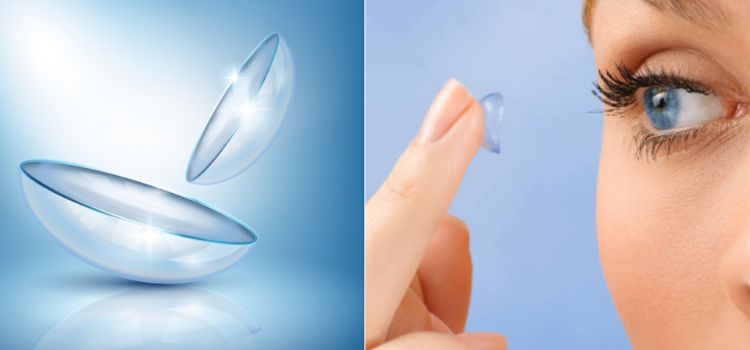
Contact lens anatomy refers to the physical, optical, and material components that determine how a contact lens corrects vision, aligns with the eye, moves during blinking, exchanges tears, transmits oxygen, and maintains comfort.
Every contact lens is a carefully engineered medical device. Its performance depends on multiple structural elements working together rather than prescription power alone.
The optic zone influences visual clarity.
The base curve influences fit.
The peripheral curves influence tear exchange.
The edge design influences comfort.
The material influences oxygen delivery.
Together, these components determine whether a lens functions successfully on the eye.
Understanding contact lens anatomy helps explain why two lenses with identical prescriptions can perform very differently.
Why Modern Contact Lens Anatomy Is More Complex Than Early Lens Designs
Modern contact lens anatomy did not emerge all at once.
It evolved through more than a century of experimentation, clinical observation, material science breakthroughs, and manufacturing innovation.
Early contact lenses were primarily optical devices.
Their primary purpose was vision correction.
Modern contact lenses must accomplish much more.
Today, a successful lens must simultaneously optimize:
- Optical performance
- Corneal physiology
- Oxygen delivery
- Tear exchange
- Mechanical comfort
- Long-term ocular health
Each anatomical component discussed throughout this article exists because earlier generations of contact lenses revealed specific limitations.
For example:
| Historical Limitation | Anatomical or Material Solution |
| Poor comfort | Advanced edge designs |
| Inadequate oxygen delivery | Silicone hydrogel materials |
| Lens instability | Modern stabilization systems |
| Corneal irritation | Improved peripheral curves |
| Tear stagnation | Enhanced tear exchange designs |
| Dry eye symptoms | Wettability technologies |
Understanding contact lens anatomy therefore requires understanding how engineering, physiology, and clinical practice evolved together.
Why Understanding Contact Lens Anatomy Matters
Most wearers know their prescription.
Few understand the architecture that allows a lens to function safely.
This knowledge matters because contact lens performance depends as much on anatomy as on optical power.
Better Lens Selection
Different eyes require different lens geometries.
A patient with a steep cornea may require a different base curve than someone with a flatter cornea.
A patient with dry eye disease may require a material with enhanced wettability.
This explains why contact lens fitting remains a clinical process rather than a simple product selection exercise.
Better Comfort
Comfort is influenced by lens anatomy more than most wearers realize.
Research and clinical experience consistently show that poor edge alignment, inadequate movement, excessive tightness, or poor tear exchange often contribute more to discomfort than prescription power.
A lens may provide perfect vision yet remain uncomfortable because its anatomy does not interact properly with the ocular surface.
Better Vision Quality
Visual acuity depends on more than refractive correction.
Optical quality is influenced by:
- Lens centration
- Optic zone diameter
- Surface quality
- Lens stability
- Tear film integrity
Even small changes in these parameters can affect visual performance.
Better Corneal Health
The cornea is avascular.
Unlike most tissues, it contains no blood vessels and obtains much of its oxygen directly from the atmosphere through the tear film.
Because contact lenses cover the corneal surface, lens anatomy directly influences oxygen availability, tear circulation, and metabolic health.
Human Vision, Corneal Physiology, and Contact Lens Design
To understand contact lens anatomy, it is necessary to understand the structure that the lens covers.
The contact lens does not function independently.
It functions as part of a larger system that includes:
- Tear film
- Cornea
- Eyelids
- Conjunctiva
- Visual system
The Cornea Is the Eye’s Primary Refractive Surface
Many people assume the natural lens inside the eye performs most focusing.
It does not.
The cornea provides most of the eye’s refractive power.
Its transparency and curvature allow incoming light to focus toward the retina.
Any contact lens placed on the eye immediately becomes part of this refractive system.
This is why lens geometry has such a profound influence on vision.
The Cornea Has Five Major Layers
The cornea contains five primary anatomical layers:
- Epithelium
- Bowman’s Layer
- Stroma
- Descemet’s Membrane
- Endothelium
Each layer contributes to transparency, structural integrity, hydration control, and visual quality.
Contact lens designers must account for how lens anatomy interacts with these tissues.
Why Corneal Transparency Matters
The cornea must remain transparent to function as an optical medium.
Transparency depends upon:
- Controlled hydration
- Oxygen availability
- Cellular metabolism
- Organized collagen structure
Even small disruptions can reduce visual quality.
This explains why modern contact lens design places significant emphasis on oxygen transmission and tear exchange.
A Contact Lens at a Glance
Before examining individual components, it helps to understand the lens as a complete system.
Every contact lens contains several major anatomical regions.
Optic Zone
The central optical region responsible for correcting refractive error.
Base Curve
The primary posterior curvature that determines corneal alignment.
Diameter
The total width of the lens from edge to edge.
Peripheral Curves
Transition zones that connect the base curve to the edge.
Edge Design
The outermost portion of the lens that interacts with the eyelids and tear film.
Center Thickness
The thickness at the center of the lens.
Influences handling, structural stability, optics, and oxygen transmission.
Material Architecture
The polymer network that determines:
- Water content
- Oxygen permeability
- Wettability
- Flexibility
- Durability
Every modern contact lens represents a balance between these interconnected variables.
The Innovation Ecosystem Behind Modern Contact Lens Anatomy
Many of the anatomical refinements found in modern contact lenses resulted from decades of research conducted by manufacturers, universities, clinicians, and biomaterials scientists.
Several companies have played particularly important roles in advancing lens anatomy and performance.
Alcon
Known for innovations involving:
- Silicone hydrogel technologies
- Daily disposable platforms
- Oxygen transmissibility optimization
Johnson & Johnson Vision
Known for advances in:
- Frequent replacement schedules
- Comfort-focused edge designs
- Ocular surface research
CooperVision
Known for:
- Toric stabilization systems
- Multifocal lens technologies
- Specialty lens development
Bausch + Lomb
Known for:
- Material science innovation
- Contact lens manufacturing advances
- Optical design refinement
Modern contact lens anatomy is therefore not simply a product of optics.
It is the result of a global innovation ecosystem involving engineering, clinical medicine, chemistry, manufacturing, and vision science.
Why Some Contact Lens Technologies Succeeded Commercially
Not every contact lens innovation became widely adopted.
Technologies succeed only when they improve outcomes while remaining practical to manufacture, prescribe, and wear.
Hydrogel lenses became commercially successful because they dramatically improved comfort compared with earlier rigid designs.
Daily disposable lenses succeeded because they simplified hygiene and reduced deposit accumulation.
Silicone hydrogel materials became dominant because they improved oxygen delivery without sacrificing the convenience that wearers expected.
The most successful contact lens technologies solved real patient problems.
This relationship between clinical need and commercial adoption continues to shape contact lens development today.
The Optic Zone
The optic zone is the visual engine of the contact lens.
Its purpose is to alter incoming light so that images focus correctly on the retina.
Without an optic zone, a contact lens would have no vision-correcting capability.
What Is the Optic Zone?
The optic zone is the central region containing the prescription power.
Light entering the eye passes through this region before reaching the cornea.
The optical design within this area determines whether the lens corrects:
- Myopia
- Hyperopia
- Astigmatism
- Presbyopia
How the Optic Zone Corrects Vision
The goal of every vision-correcting lens is identical:
Place the focal point directly on the retina.
The optic zone achieves this through controlled refraction.
By changing the path of incoming light, the lens compensates for refractive errors and restores clearer vision.
Central Optics and Peripheral Optics
Modern lenses often contain multiple optical zones.
Central Optics
Responsible for primary visual correction.
Peripheral Optics
Influence:
- Peripheral vision
- Contrast sensitivity
- Night vision
- Aberration control
Advanced lens designs increasingly optimize both areas rather than focusing solely on central visual acuity.
Why Optic Zone Size Affects Night Vision
This is one of the most overlooked aspects of contact lens anatomy.
During low-light conditions, the pupil dilates.
A larger pupil may extend beyond the optic zone.
When this occurs, light can enter through regions with different optical properties.
Potential consequences include:
- Halos
- Glare
- Reduced contrast sensitivity
Manufacturers therefore carefully balance optic zone diameter against thickness, oxygen transmission, and overall lens geometry.
This represents one of many engineering tradeoffs in modern contact lens design.
The Base Curve
The base curve is one of the most important fitting parameters in contact lens practice.
It determines how the lens aligns with the cornea.
A poorly chosen base curve can compromise:
- Comfort
- Vision
- Tear exchange
- Corneal physiology
even when prescription power is correct.
What Is Base Curve?
Base curve refers to the radius of curvature of the posterior lens surface.
It is usually expressed in millimeters.
Examples include:
- 8.3 mm
- 8.4 mm
- 8.6 mm
- 8.8 mm
Smaller values indicate steeper curves.
Larger values indicate flatter curves.
Why Base Curve Matters
The cornea has a unique shape.
The contact lens must align appropriately with that shape.
If the lens is excessively steep:
- Movement decreases
- Tear exchange declines
- Tight lens syndrome may occur
If the lens is excessively flat:
- Movement increases
- Stability decreases
- Comfort may decline
Successful fitting requires balance.
Why Base Curve Alone Does Not Determine Fit
Many consumers assume matching base curve values guarantees an appropriate fit.
This is incorrect.
Fit also depends on:
- Lens diameter
- Material modulus
- Peripheral curves
- Edge design
- Corneal shape
Modern fitting evaluates the entire anatomical architecture of the lens rather than a single number printed on the box.
Lens Diameter
Lens diameter is the total width of a contact lens measured from one edge to the opposite edge.
Although often overlooked by consumers, diameter is one of the most influential anatomical parameters in contact lens design.
Diameter affects:
- Corneal coverage
- Lens movement
- Centration
- Stability
- Tear exchange
- Comfort
A lens with an ideal prescription can perform poorly if its diameter is inappropriate for the eye.
How Diameter Is Measured
Diameter is expressed in millimeters.
Common soft lens diameters include:
- 13.8 mm
- 14.0 mm
- 14.2 mm
- 14.5 mm
Rigid gas permeable lenses are generally smaller.
Typical RGP diameters range from:
- 8.5 mm
- 9.0 mm
- 10.0 mm
Scleral lenses are substantially larger and may range from:
- 14 mm
- 18 mm
- 24 mm
The appropriate diameter depends on ocular anatomy and lens design objectives.
Why Diameter Influences Fit
Diameter determines how much of the cornea and surrounding ocular surface the lens covers.
A larger diameter generally increases:
- Coverage
- Stability
- Lens retention
A smaller diameter often increases:
- Mobility
- Tear exchange
- Corneal exposure
Neither approach is universally superior.
The optimal choice depends on the clinical situation.
Diameter and Lens Movement
Movement is essential for lens performance.
A lens that barely moves may restrict tear circulation.
A lens that moves excessively may create unstable vision.
Diameter directly influences this balance.
This is why diameter selection forms a critical part of professional lens fitting.
Peripheral Curves
The peripheral curve system is one of the least understood components of contact lens anatomy.
Most consumers never hear about peripheral curves.
Eye care professionals evaluate them constantly.
What Are Peripheral Curves?
Peripheral curves are the transition zones between the central base curve and the outer edge of the lens.
Their primary purpose is to create a smooth anatomical relationship between:
- Lens
- Cornea
- Tear film
- Eyelids
Without peripheral curves, contact lenses would fit poorly and function inefficiently.
Why Peripheral Curves Exist
The cornea is not uniformly curved.
Curvature gradually changes from the center toward the periphery.
A contact lens must accommodate these changes.
Peripheral curves allow the lens to align more naturally with ocular anatomy.
This improves:
- Comfort
- Stability
- Tear dynamics
The Relationship Between Peripheral Curves and Tear Exchange
One of the most important functions of peripheral curves involves tear circulation.
The space beneath the lens contains tears.
These tears must move.
Tear exchange supports:
- Oxygen transport
- Waste removal
- Debris removal
- Surface lubrication
Corneal physiology research demonstrates that tear circulation contributes to maintaining a healthy ocular environment.
Peripheral curves play a major role in regulating this process.
Why Tear Exchange Matters
Many people assume oxygen reaches the cornea exclusively through the lens material.
Modern materials transmit substantial oxygen.
Tear exchange still matters.
Fresh tears help deliver nutrients and remove metabolic byproducts produced by corneal cells.
Without adequate tear movement:
- Debris accumulates
- Metabolic waste accumulates
- Comfort declines
- Physiological stress may increase
This explains why lens movement remains an important fitting consideration.
Peripheral Curve Design and Modern Lens Engineering
Modern contact lenses often incorporate sophisticated peripheral geometries.
Designers may modify:
- Curve depth
- Width
- Angle
- Transition profiles
to optimize lens performance.
These refinements are largely invisible to wearers but significantly influence clinical outcomes.
Contact Lens Edge Design
If one anatomical feature determines first-impression comfort, it is often the edge.
Many contact lens wearers never think about the edge.
Their eyelids notice it thousands of times every day.
What Is the Lens Edge?
The edge is the outermost boundary of the contact lens.
It represents the point where the lens meets:
- Tear film
- Conjunctiva
- Eyelids
This area experiences continuous mechanical interaction during blinking.
Why Edge Design Matters
Humans blink approximately:
- 10 to 20 times per minute
- More than 10,000 times daily
Each blink causes the eyelids to pass across the lens surface.
Poor edge design can increase mechanical interaction.
Potential consequences include:
- Lens awareness
- Irritation
- Dryness sensations
- Reduced wearing comfort
This is one reason modern lens manufacturers devote significant research to edge architecture.
Thin Edge Designs
Thin edges reduce eyelid interaction.
Advantages may include:
- Improved comfort
- Reduced awareness
- Smoother blinking
Many modern soft lenses utilize highly tapered edges for this reason.
Rounded Edge Designs
Rounded edges help distribute mechanical forces more evenly.
This can improve comfort while maintaining lens stability.
Specialized Edge Profiles
Certain specialty lenses require customized edge geometries.
Examples include:
- Scleral lenses
- Orthokeratology lenses
- Therapeutic lenses
In these cases, edge architecture becomes a critical component of lens performance.
Why Edge Design Influences Comfort More Than Most Wearers Realize
When wearers describe a lens as:
- Comfortable
- Natural
- Invisible
they are often experiencing the benefits of optimized edge design.
The eyelids contain highly sensitive nerve endings.
Even subtle differences in edge shape can alter sensory perception.
This explains why two lenses with identical prescriptions and materials can feel dramatically different.
Center Thickness
Center thickness refers to the thickness of the lens at its central point.
This parameter influences:
- Optics
- Handling
- Durability
- Oxygen transmission
Center thickness represents one of the most important engineering tradeoffs in lens design.
Why Thickness Matters
A thicker lens is often:
- Easier to handle
- More durable
- More stable
A thinner lens is often:
- More comfortable
- More flexible
- More oxygen efficient
Manufacturers must balance these competing priorities.
Thickness and Optical Performance
Lens thickness affects how light travels through the lens.
Different prescriptions require different thickness profiles.
For example:
Minus Lenses
Thinner in the center.
Thicker near the edges.
Used for myopia correction.
Plus Lenses
Thicker in the center.
Thinner toward the edges.
Used for hyperopia correction.
The optical requirements of the prescription therefore influence lens anatomy directly.
Thickness and Oxygen Delivery
One of the most important physiological consequences of thickness involves oxygen transmission.
The cornea requires oxygen to maintain:
- Transparency
- Metabolism
- Cellular health
Reduced oxygen availability may contribute to hypoxia-related complications.
Because oxygen must pass through the lens, thickness becomes a critical variable.
Understanding the Difference Between Dk and Dk/t
This distinction is frequently misunderstood.
Dk
Measures oxygen permeability of the material itself.
Higher Dk values indicate greater oxygen movement through the material.
Dk/t
Measures oxygen transmissibility through the finished lens.
Thickness influences Dk/t.
Two lenses may have identical materials and identical Dk values.
The thicker lens will often transmit less oxygen.
This is why modern lens design evaluates both measurements rather than material properties alone.
Front Surface Design
The front surface faces the external environment.
Its geometry largely determines optical performance.
Modern front surface designs may include:
- Spherical optics
- Aspheric optics
- Toric optics
- Multifocal optics
The complexity of the front surface has increased substantially over the past several decades.
Wavefront-Inspired Designs
Some modern lenses incorporate optical principles derived from wavefront technology.
These designs attempt to reduce higher-order aberrations that can affect:
- Night vision
- Contrast sensitivity
- Visual sharpness
This represents one of the most advanced areas of modern contact lens engineering.
Back Surface Design
The back surface contacts the tear film and aligns with the cornea.
Its primary responsibilities include:
- Fit
- Stability
- Movement
- Tear dynamics
The back surface often determines whether a lens performs successfully on a particular eye.
Why Back Surface Design Is Critical
A lens may contain excellent optics.
If the back surface does not align appropriately with ocular anatomy, performance suffers.
Potential consequences include:
- Decentration
- Excessive movement
- Reduced comfort
- Fluctuating vision
This explains why fitting remains a clinical science rather than simply selecting a prescription.
Contact Lens Anatomy as an Integrated System
The most important lesson in contact lens anatomy is that no component functions independently.
The:
- Optic zone
- Base curve
- Diameter
- Peripheral curves
- Edge design
- Thickness profile
- Material architecture
all influence one another.
Changing a single parameter often affects multiple aspects of lens performance.
Modern contact lenses therefore represent highly sophisticated biomedical devices designed to balance:
- Vision correction
- Comfort
- Oxygen delivery
- Tear exchange
- Corneal physiology
The next section will explore the material architecture of contact lenses, including water content, oxygen permeability, silicone hydrogel technology, surface treatments, wettability science, and how modern materials interact with corneal physiology and the tear film.
Engineering Tradeoffs in Contact Lens Design
One of the most important realities of contact lens engineering is that no lens can maximize every performance characteristic simultaneously.
Every design decision involves tradeoffs.
| Goal | Potential Tradeoff |
| Higher oxygen transmission | Increased stiffness |
| Greater durability | Reduced flexibility |
| Larger optic zones | Increased thickness |
| Greater stability | Reduced movement |
| Higher water content | Increased dehydration risk |
| Softer materials | Reduced handling stability |
Modern contact lens engineering focuses on optimization rather than perfection.
Designers must balance:
- Visual performance
- Comfort
- Physiological compatibility
- Manufacturing feasibility
- Economic scalability
This balancing process explains why different lenses can perform differently even when they share similar prescriptions.
Contact Lens Materials
Contact lens materials determine how a lens interacts with the eye.
The material influences:
- Oxygen delivery
- Water retention
- Flexibility
- Surface wettability
- Deposit resistance
- Comfort
- Corneal physiology
Two lenses can have identical anatomy and identical prescriptions yet perform differently because of material differences.
For this reason, material science is one of the most important areas of modern contact lens development.
Why Contact Lens Materials Matter
The human cornea is living tissue.
Unlike eyeglass lenses, contact lenses remain in continuous contact with the ocular surface.
The material must therefore function as both:
- An optical device
- A biomedical device
This dual role explains why contact lens development increasingly depends on polymer chemistry, biomaterials science, and ocular physiology.
What Is a Contact Lens Material?
A contact lens material is a polymer engineered to provide specific physical and biological properties.
Desired characteristics include:
- Optical transparency
- Biocompatibility
- Oxygen permeability
- Mechanical stability
- Wettability
- Durability
No material possesses every ideal property simultaneously.
Modern lens design involves balancing competing characteristics.
The Evolution of Contact Lens Materials
Understanding modern materials requires understanding their historical progression.
Each generation emerged to solve limitations of earlier designs.
Glass
The first contact lenses were made from glass.
Advantages included:
- Excellent optical clarity
- Stable optics
Limitations included:
- Heavy weight
- Fragility
- Minimal oxygen transmission
- Poor comfort
These limitations restricted widespread adoption.
PMMA (Polymethyl Methacrylate)
PMMA lenses replaced glass during the twentieth century.
Advantages included:
- Lightweight construction
- Durability
- Improved manufacturing
A major limitation remained.
PMMA transmitted almost no oxygen.
Corneal physiology research eventually revealed that oxygen deprivation could compromise corneal health.
This discovery transformed contact lens science.
Hydrogel
Hydrogel materials represented a major breakthrough.
Developed through the pioneering work of Otto Wichterle and Drahoslav Lim, these materials absorbed water and became soft when hydrated.
This dramatically improved comfort.
Millions of wearers adopted soft contact lenses because they felt more natural than rigid alternatives.
Silicone Hydrogel
Silicone hydrogel materials addressed one of the largest remaining challenges:
oxygen delivery.
These materials transformed modern contact lens practice by significantly increasing corneal oxygen availability.
Today, silicone hydrogel dominates much of the global soft contact lens market.
Why Silicone Hydrogel Changed Contact Lens Anatomy
Few innovations have influenced contact lens anatomy as profoundly as silicone hydrogel materials.
Before silicone hydrogel, designers often faced competing priorities.
Increasing comfort sometimes reduced oxygen delivery.
Improving oxygen delivery sometimes created new fitting challenges.
Silicone hydrogel materials changed that balance.
Their high oxygen permeability allowed manufacturers to redesign:
- Lens thickness profiles
- Wearing schedules
- Edge architectures
- Optical zones
while maintaining substantially higher oxygen transmission.
This development transformed contact lenses from primarily optical devices into devices designed to support healthier long-term corneal physiology.
Many modern anatomical refinements became possible because silicone hydrogel materials removed earlier oxygen-related limitations.
Hydrogel Contact Lenses
Hydrogel lenses contain substantial amounts of water.
Water becomes integrated within the polymer structure.
This creates a soft, flexible material that conforms easily to the ocular surface.
How Hydrogel Materials Work
Hydrogels function by absorbing water molecules.
The hydrated material becomes:
- Flexible
- Soft
- Comfortable
- Transparent
The water component also contributes to oxygen transport.
Early hydrogel technology relied heavily on water as the primary pathway for oxygen movement.
Advantages of Hydrogel Lenses
Hydrogel materials offer:
- Excellent initial comfort
- Easy adaptation
- Soft lens sensation
- Broad availability
Many first-time wearers experience rapid adaptation because hydrogel lenses interact gently with the ocular surface.
Limitations of Hydrogel Materials
Hydrogel technology has physiological limitations.
To increase oxygen transmission, manufacturers often increase water content.
This strategy eventually reaches practical limits.
Highly hydrated lenses may:
- Dehydrate during wear
- Lose stability
- Accumulate deposits
- Reduce comfort late in the day
These challenges motivated the development of newer materials.
Silicone Hydrogel Contact Lenses
Silicone hydrogel represents one of the most important innovations in contact lens history.
Its development fundamentally changed how oxygen reaches the cornea.
How Silicone Hydrogel Works
Traditional hydrogel lenses transmit oxygen primarily through water.
Silicone hydrogel introduces microscopic silicone pathways.
These pathways allow oxygen molecules to move directly through the material.
This dramatically increases oxygen transmission.
The result is improved corneal oxygenation even when the lens covers the eye.
Why Silicone Matters
Silicone possesses exceptionally high oxygen permeability.
This property allows substantial oxygen movement without requiring extremely high water content.
This solved a major problem that had challenged contact lens designers for decades.
Benefits of Silicone Hydrogel
Advantages include:
- Higher oxygen transmission
- Better physiological performance
- Reduced hypoxia risk
- Improved corneal health
- Extended wear capability
Research published throughout ophthalmology and contact lens literature consistently demonstrates that increased oxygen availability improves corneal physiological outcomes.
Water Content
Water content is one of the most recognized contact lens specifications.
Consumers frequently assume higher water content always means better performance.
The reality is more complex.
What Is Water Content?
Water content refers to the percentage of lens mass composed of water when fully hydrated.
Examples include:
- 38%
- 48%
- 55%
- 62%
- 70%+
Different materials achieve different hydration levels.
Why Water Matters
Water contributes to:
- Comfort
- Flexibility
- Surface smoothness
- Optical clarity
A hydrated lens generally interacts more naturally with the ocular surface.
The High Water Content Misconception
Many consumers believe:
“Higher water content equals a better lens.”
This is not always true.
Some high-water materials may lose moisture during wear.
When dehydration occurs:
- Comfort may decline
- Vision may fluctuate
- Lens performance may deteriorate
This illustrates why modern lens evaluation considers multiple material properties rather than a single specification.
Wettability
A contact lens must remain wet to function optimally.
This requirement introduces another important material characteristic:
wettability.
What Is Wettability?
Wettability describes how easily tears spread across the lens surface.
Good wettability produces a stable tear film.
Poor wettability creates an irregular optical surface.
Why Wettability Affects Vision
The tear film forms the first refractive surface of the eye.
An unstable tear film can reduce:
- Visual clarity
- Contrast sensitivity
- Comfort
Even a perfectly designed lens may perform poorly if its surface does not maintain proper wetting.
Clinical Signs of Poor Wettability
Patients may experience:
- Intermittent blur
- Dryness
- Lens awareness
- Reduced comfort late in the day
Modern material science increasingly focuses on improving surface wettability.
Surface Treatments and Surface Technologies
Many contemporary contact lenses incorporate advanced surface modifications.
These technologies improve the interaction between:
- Lens
- Tears
- Cornea
- Eyelids
Plasma Surface Treatments
Some materials undergo plasma treatment during manufacturing.
This process alters surface chemistry.
Benefits may include:
- Improved wettability
- Enhanced comfort
- Better deposit resistance
Internal Wetting Agents
Certain lenses incorporate wetting molecules directly into the polymer matrix.
These agents help maintain hydration throughout wear.
Biomimetic Surface Technologies
Emerging technologies attempt to mimic biological structures found within the natural tear film.
The goal is to create lens surfaces that interact more naturally with the ocular environment.
Material Modulus
Material modulus measures stiffness.
It describes how resistant a material is to deformation.
Why Modulus Matters
Higher-modulus materials:
- Maintain shape well
- Handle easily
- Resist deformation
Lower-modulus materials:
- Feel softer
- Conform more readily
- May improve comfort
Finding the optimal balance remains an active area of contact lens development.
Oxygen Permeability (Dk)
Oxygen permeability is one of the most important measurements in contact lens science.
It directly relates to corneal physiology.
What Is Dk?
Dk measures the oxygen permeability of a contact lens material.
Higher Dk values indicate greater oxygen movement through the material itself.
Dk evaluates the material.
Not the finished lens.
Why Dk Matters
The cornea requires oxygen to maintain:
- Transparency
- Metabolism
- Cellular function
- Structural integrity
Insufficient oxygen may disrupt these processes.
This is why oxygen permeability became a defining characteristic of modern contact lens materials.
Oxygen Transmissibility (Dk/t)
Dk alone does not determine oxygen delivery.
Lens thickness also matters.
What Is Dk/t?
Dk/t measures oxygen transmission through the finished lens.
The formula incorporates:
- Material permeability
- Lens thickness
This makes Dk/t more clinically relevant than Dk alone.
Why Dk/t Is Often More Important
Two lenses may share identical Dk values.
If one lens is thicker, oxygen transmission decreases.
The thinner lens may therefore provide better physiological performance.
This explains why modern lens development evaluates both measurements.
Corneal Hypoxia
Corneal hypoxia occurs when insufficient oxygen reaches corneal tissue.
Historically, hypoxia represented one of the greatest challenges in contact lens wear.
What Happens During Hypoxia?
Reduced oxygen availability may contribute to:
- Corneal swelling
- Reduced transparency
- Neovascularization
- Epithelial changes
- Discomfort
These physiological responses motivated decades of research into oxygen-permeable materials.
Why Modern Lenses Are Safer
Advances in material science have dramatically improved oxygen delivery.
Modern silicone hydrogel lenses provide oxygen levels that early contact lens pioneers could not achieve.
This improvement is one reason modern contact lenses are generally safer than earlier generations.
Future Material Innovations
Material science remains one of the fastest-moving areas in contact lens research.
Researchers continue exploring:
- Advanced biomaterials
- Drug-delivering lenses
- Antimicrobial surfaces
- Smart polymers
- Bio-inspired coatings
Future lenses may actively interact with ocular physiology rather than merely correcting vision.
Contact Lens Materials as a Biological Interface
The most important concept in modern contact lens science is this:
A contact lens material is not simply plastic.
It is a biological interface.
The material must simultaneously interact with:
- The tear film
- The corneal epithelium
- The eyelids
- Oxygen pathways
- Visual optics
Successful materials balance these competing demands.
This balance explains why contact lens development increasingly combines optics, chemistry, biomedical engineering, and ocular physiology into a single discipline.
Contact Lens Markings and Packaging Parameters
Every contact lens package contains technical specifications.
These values describe the anatomical and optical characteristics of the lens.
Many consumers recognize these numbers without fully understanding what they mean.
Each parameter provides information about how the lens interacts with the eye.
Power (PWR or SPH)
Power indicates the optical correction contained within the lens.
This value is measured in diopters.
Examples include:
- -1.00
- -2.50
- -5.00
- +1.50
- +4.00
Negative values correct myopia.
Positive values correct hyperopia.
Power represents only one component of contact lens anatomy.
Two lenses with identical powers may fit and perform differently because of differences in other anatomical parameters.
Base Curve (BC)
Base curve describes the curvature of the posterior lens surface.
Common values include:
- 8.3 mm
- 8.4 mm
- 8.6 mm
- 8.8 mm
This measurement influences lens alignment and movement.
Diameter (DIA)
Diameter represents the overall width of the lens.
Soft lenses commonly range from:
- 13.8 mm
- 14.0 mm
- 14.2 mm
- 14.5 mm
Diameter affects:
- Coverage
- Stability
- Movement
- Tear exchange
Cylinder (CYL)
Cylinder power appears on toric lenses.
It corrects astigmatism.
Examples include:
- -0.75
- -1.25
- -2.25
The cylinder value indicates the magnitude of astigmatic correction.
Axis
Axis specifies the orientation of astigmatism correction.
It is measured in degrees from:
- 0°
- 180°
Examples include:
- 90°
- 180°
- 45°
Without proper axis alignment, astigmatism correction becomes ineffective.
Add Power
Multifocal lenses include an additional value called Add.
Examples include:
- Low Add
- Medium Add
- High Add
- +1.00
- +2.50
This parameter helps compensate for presbyopia.
How Eye Doctors Evaluate Contact Lens Anatomy
Modern contact lens fitting involves much more than prescribing lens power.
Practitioners evaluate how the entire lens-eye system functions.
Lens Centration
A properly fitted lens should center appropriately over the cornea.
Poor centration may result in:
- Blurred vision
- Variable optics
- Reduced comfort
Lens anatomy strongly influences centration.
Lens Movement
Movement is assessed during blinking.
Most soft lenses should demonstrate slight movement.
Insufficient movement may reduce tear exchange.
Excessive movement may reduce stability.
A balance must be achieved.
Coverage
The lens should adequately cover the cornea.
Insufficient coverage may expose portions of the cornea.
Excessive coverage may influence tear dynamics.
Push-Up Test
Many practitioners perform a push-up test.
The lens is gently displaced.
The clinician observes how quickly it returns to position.
This provides information regarding:
- Fit
- Tightness
- Mobility
- Tear exchange
Corneal Physiology Assessment
Lens anatomy is evaluated not only for vision but also for physiological compatibility.
Practitioners monitor:
- Corneal integrity
- Tear quality
- Oxygen-related changes
- Ocular surface health
The goal is long-term visual performance without compromising tissue health.
How Practitioners Actually Evaluate Contact Lens Anatomy
Consumers often focus on prescription power.
Clinicians rarely begin there.
Eye care professionals generally evaluate anatomy in a different order.
First: Corneal Health
The cornea must remain healthy before any lens can succeed.
Practitioners assess:
- Corneal integrity
- Oxygen-related changes
- Ocular surface health
Second: Lens Fit
Professionals evaluate:
- Centration
- Movement
- Coverage
- Stability
Third: Tear Film Performance
Tear quality influences:
- Comfort
- Vision stability
- Lens wetting
- Long-term success
Fourth: Optical Performance
Only after fit and physiology are evaluated does visual performance become the primary focus.
Fifth: Patient Lifestyle
The ideal lens for:
- An athlete
- A truck driver
- A software developer
- A traveler
- A patient with dry eye disease
may differ substantially.
This practitioner perspective helps explain why successful lens selection involves more than choosing a prescription power.
Contact Lens Anatomy in Different Lens Designs
Not all lenses share identical anatomy.
Different visual problems require different structural solutions.
Toric Lens Anatomy
Toric lenses contain additional design features that maintain rotational stability.
Without stabilization, astigmatic correction becomes ineffective.
Stabilization Zones
Modern toric lenses may incorporate:
- Prism ballast
- Dynamic stabilization
- Accelerated stabilization designs
These structures help maintain consistent orientation.
Rotational Control
Even minor rotation can affect vision quality.
This explains why toric anatomy is significantly more complex than spherical lens anatomy.
Multifocal Lens Anatomy
Multifocal lenses contain multiple optical powers.
Their anatomy must support simultaneous vision at different distances.
Concentric Optical Zones
Many multifocal designs contain alternating rings of:
- Distance power
- Intermediate power
- Near power
These zones create multiple focal points simultaneously.
Aspheric Optics
Some multifocal lenses use gradual power transitions.
These designs reduce abrupt optical changes and often improve adaptation.
Rigid Gas Permeable Lens Anatomy
Rigid gas permeable lenses differ substantially from soft lenses.
Their anatomy is highly dependent on precise geometric control.
Smaller Diameter
RGP lenses typically cover less of the cornea.
This increases tear exchange and oxygen availability.
Stable Optical Surface
Because the lens maintains its shape, optical performance remains highly consistent.
This often produces excellent visual acuity.
Tear Lens Formation
One of the most unique aspects of RGP anatomy is the tear lens.
A layer of tears forms between the lens and cornea.
This tear layer contributes significantly to optical correction.
Scleral Lens Anatomy
Scleral lenses represent one of the most sophisticated forms of contact lens design.
Their anatomy differs dramatically from conventional lenses.
Corneal Vault
A scleral lens does not rest on the cornea.
Instead, it vaults over the cornea completely.
This creates a fluid reservoir beneath the lens.
Fluid Chamber
The liquid reservoir serves multiple functions:
- Optical correction
- Surface protection
- Corneal hydration
This design makes scleral lenses particularly valuable for irregular corneas and severe ocular surface disease.
Landing Zone
The landing zone rests on the sclera.
Its geometry determines:
- Stability
- Comfort
- Physiological performance
Scleral fitting therefore requires highly specialized expertise.
Common Anatomical Design Problems
Even advanced contact lenses can encounter design-related challenges.
Understanding these issues helps explain why follow-up evaluations remain important.
Tight Lens Syndrome
Occurs when a lens fits excessively steeply.
Potential signs include:
- Reduced movement
- Lens adherence
- Discomfort
- Reduced tear exchange
Excessive Movement
Occurs when a lens fits too loosely.
Possible consequences include:
- Lens awareness
- Variable vision
- Instability
Decentration
A decentered lens does not align properly with the visual axis.
This may affect:
- Vision quality
- Comfort
- Optical performance
Edge Awareness
Poor edge alignment may increase interaction with the eyelids.
Symptoms may include:
- Foreign body sensation
- Irritation
- Reduced comfort
Hypoxia-Related Changes
Historically, inadequate oxygen transmission contributed to complications such as:
- Corneal edema
- Neovascularization
- Microcysts
Modern silicone hydrogel materials have reduced these risks substantially.
Advanced Contact Lens Anatomy Comparison
| Component | Primary Function | Influences |
| Optic Zone | Vision correction | Visual acuity |
| Base Curve | Corneal alignment | Fit and movement |
| Diameter | Coverage | Stability and tear exchange |
| Peripheral Curves | Transition geometry | Tear dynamics |
| Edge Design | Lid interaction | Comfort |
| Center Thickness | Structural support | Oxygen transmission |
| Material | Physiological interaction | Comfort and corneal health |
Contact Lens Anatomy by Lens Type
| Lens Type | Key Anatomical Feature |
| Spherical Lens | Uniform optical power |
| Toric Lens | Stabilization system |
| Multifocal Lens | Multiple optical zones |
| RGP Lens | Rigid optical surface |
| Scleral Lens | Corneal vault and fluid reservoir |
Expert Insights
The most important principle in contact lens anatomy is that no component functions independently.
The optic zone influences vision.
The base curve influences fit.
The diameter influences movement.
The edge influences comfort.
The material influences physiology.
Together, these components create a lens-eye system that must simultaneously satisfy optical, mechanical, and biological requirements.
This multidisciplinary interaction explains why modern contact lenses represent one of the most sophisticated biomedical devices used in everyday life.
How Contact Lens Anatomy Connects to Other Contact Lens Topics
Contact lens anatomy serves as the foundation for nearly every area of contact lens science.
Contact Lens History
The evolution of contact lens anatomy reflects centuries of innovation in optics, biomaterials, and manufacturing.
Contact Lens Materials
Material properties influence:
- Oxygen permeability
- Wettability
- Modulus
- Surface interactions
How Contact Lenses Work
Optic zones, refractive geometry, and lens power determine how incoming light focuses on the retina.
Colored Contact Lenses
Colored lenses incorporate pigment technologies while preserving:
- Optical correction
- Oxygen transmission
- Tear exchange
- Anatomical fit
Contact Lens Fitting
Base curve, diameter, peripheral curves, and edge architecture determine how lenses interact with the ocular surface.
Contact Lens Safety
Corneal health depends heavily on:
- Oxygen delivery
- Tear circulation
- Mechanical interaction
- Material biocompatibility
Understanding contact lens anatomy therefore provides the structural framework for understanding virtually every other contact lens topic.
The Future of Contact Lens Anatomy
Historically, contact lens anatomy focused on correcting refractive errors.
Future lens anatomy may support additional functions.
Researchers are actively exploring:
- Drug-delivering lenses
- Biosensing lenses
- Intraocular pressure monitoring systems
- Smart contact lenses
- Augmented reality platforms
These technologies may require entirely new anatomical architectures.
Future lenses may incorporate:
- Embedded sensors
- Therapeutic reservoirs
- Advanced biomaterials
- Electronic components
If successful, contact lens anatomy will evolve from passive vision correction toward active healthcare and digital interaction.
The future of contact lens anatomy may be defined as much by biomedical engineering and electronics as by optics.
Frequently Asked Questions
What is the most important part of a contact lens?
No single component is most important. Vision depends on the optic zone, while comfort and eye health depend heavily on fit, edge design, material properties, and oxygen transmission.
What does base curve mean on a contact lens?
Base curve describes the curvature of the back surface of the lens and influences how the lens aligns with the cornea.
Why does contact lens diameter matter?
Diameter affects lens coverage, movement, centration, stability, and tear exchange.
What are peripheral curves?
Peripheral curves connect the base curve to the lens edge and help regulate tear circulation and comfort.
Why is oxygen permeability important?
The cornea requires oxygen to maintain transparency and cellular health. Higher oxygen permeability generally supports better physiological performance.
What is Dk?
Dk measures the oxygen permeability of the lens material itself.
What is Dk/t?
Dk/t measures oxygen transmission through the finished lens and accounts for both material permeability and lens thickness.
Why do scleral lenses vault over the cornea?
Vaulting creates a fluid reservoir that protects the ocular surface while providing optical correction.
Key Takeaways
- Contact lens anatomy includes the optic zone, base curve, diameter, peripheral curves, edge design, thickness profile, and material architecture.
- Each component influences vision, comfort, tear exchange, oxygen delivery, and corneal health.
- The cornea, tear film, and contact lens function as an integrated physiological and optical system.
- Base curve and diameter influence fit but do not independently determine lens performance.
- Peripheral curves help regulate tear exchange and support ocular surface physiology.
- Edge design plays a major role in comfort because eyelids interact with the lens thousands of times each day.
- Material science determines oxygen permeability, wettability, flexibility, and physiological compatibility.
- Silicone hydrogel materials revolutionized contact lens safety by dramatically improving oxygen transmission.
- Toric, multifocal, RGP, and scleral lenses possess specialized anatomical features designed for specific visual and clinical needs.
- Modern contact lens anatomy reflects the combined influence of optics, corneal physiology, tear film science, biomaterials engineering, and clinical eye care.
A contact lens is far more than a prescription. It is a precisely engineered optical-biological system designed to interact with the tear film, cornea, eyelids, and visual system while maintaining clear vision and long-term ocular health.